Directive
20+ SEO articles, sales enablement pieces, and feature landing pages across SalesTech, RevOps, and CX accounts
The brief
Directive is a performance marketing agency with enterprise SaaS clients. They needed a content partner who could drop into multi-client work without slowing the team down.
The work moved across SalesTech, RevOps, and CX accounts with plenty of stakeholder loops.
What I handled
The job was execution, but not order-taking.
I had to understand the product fast, turn research into excellent first drafts, and keep drafts moving through agency and client feedback.
Product, sales, SEO, and client feedback all had to turn into drafts that could survive review without losing the buyer thread.
Long-form SEO articles: Some pieces ran 3,000+ words. The work was making hard product categories readable without sanding off the details.
Sales enablement content: I wrote decision-stage pieces that supported the sales conversation with proof and strong product understanding. The things buyers want to see when they're comparing options.
Feature landing pages: Product-led pages that explained what the feature did and who it was for without flattening the offer into generic SaaS language.
Multi-account flexibility: Sales productivity, revenue workflows, customer experience. Different products. Different buyers. Different reviewers. Same job each time: get the context, write with depth, and make the next review easier.
Agency workflow support: I worked inside the agency workflow instead of adding a new one. I knew when to ask for context, when to make the call, and how to keep feedback loops from turning into rewrites from scratch.
How I got the context
Because this was agency ghostwriting, I couldn't lean on personal POV or pretend expertise into the draft.
That meant burying my nose in product demos, webinars, old content, product pages, support docs, FAQs, competitor pages, customer reviews, and whatever client documentation came through the brief.
That context did two jobs.
First, accuracy. Enterprise SaaS content gets thin fast when the writer doesn't understand the product.
Second, readability. I turned dense product information into copy a buyer could follow and a search bot could rank: clear structure, scannable sections, internal links, and enough business and product context to make the piece credible.
What changed
- 20+ articles and pages across 4 B2B SaaS accounts
- Page 1 rankings for multiple target keywords
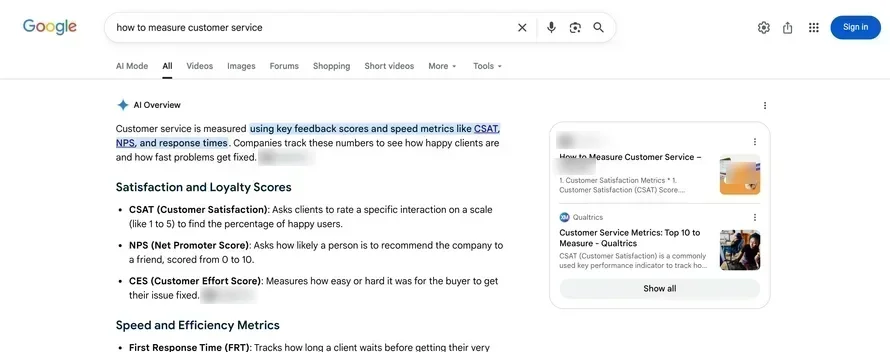
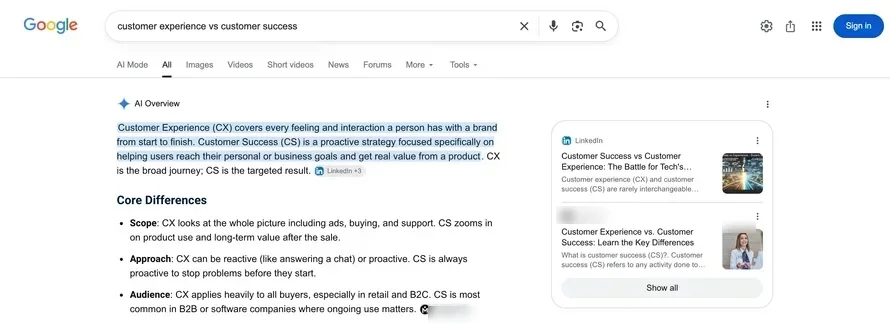
- CX articles are cited in Google's AI Overviews on the definitional queries they were built to answer
- Senior content support that could move between agency feedback loops without slowing production
- Product-aware drafts gave account teams cleaner work to review and pass along
Here are results from one client in the customer experience industry. The client name is redacted.
Cited above Qualtrics
Cited on the distinction
Want similar results?
Let's talk about your content needs and I'll take it from there.
Start a project →